Bitcoin Long-Term Holders Now Control 76% of Supply

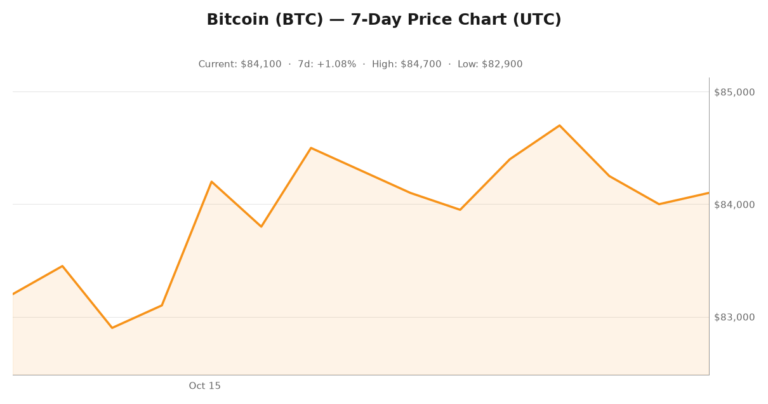
The Bitcoin supply story in October 2026 is not a price story. It is a custody story. While headlines obsess over whether BTC will retest $84,000 or slide further on ETF outflows, the on-chain data shows something more interesting: long-term holders now control roughly 76% of the circulating Bitcoin supply. That is the highest reading of the current cycle, and it tells us exactly who is buying, who is selling, and why the next quarter could catch both sides off guard.
For anyone trading Bitcoin today, this concentration matters more than any single candle on the daily chart. It shapes liquidity, it shapes volatility, and it shapes who actually has the dry powder to move the market.
What the On-Chain Data Actually Shows
According to Glassnode’s Coin Days Destroyed metric and the holder-band analysis published by Bitcoin Magazine Pro, wallets that have not moved their BTC in 155 days or more now hold approximately 14.8 million of the 19.6 million Bitcoin in circulation. That is a substantial jump from the post-FTX capitulation lows in late 2022, when that figure briefly collapsed to roughly 38% as forced sellers dominated the market.
The implication is structural. Those coins are not sitting on exchange hot wallets. They live in cold storage, multisig vaults, and the regulated custody products run by firms like Coinbase Custody, Fidelity Digital Assets, and a new wave of Bitcoin-native trust companies. For traders, that distinction is the entire game.
The 155-day threshold explained
The 155-day cutoff is the standard on-chain proxy for a long-term holder. It captures roughly one full quarter of holding through both up and down markets. Bitcoin moved across that threshold in July 2026 after ETF outflows accelerated, and the LTH supply share has risen every week since.
Who Is Selling And Why
Here is where the contrarian read gets sharper. The cohort actively distributing coins in Q4 2026 is not retail panic sellers. It is two narrow groups, and understanding both is essential.
- Public miners working through post-halving economics. Hashprice remains compressed even after difficulty stabilized, and several majors have continued treasury rotations, converting mined BTC into fiat to fund expansion and debt service. Marathon and CleanSpark each sold between 8% and 12% of their monthly production in September, per their public filings.
- Spot Bitcoin ETFs, which registered their first four-week stretch of net outflows in October. Combined redemptions across IBIT, FBTC, ARKB, and BITB total roughly $1.9 billion since September 30, according to Farside Investors data. When an ETF sees outflows, the authorized participant must redeem shares, which pulls Bitcoin off Coinbase Prime and sends it back to the sponsor, where it typically sits in deeper cold storage.
Notice the pattern. Both groups of sellers are turning Bitcoin into something more illiquid, not less. Miners sell into fiat but replenish via block rewards, and ETF outflows simply re-warehouse the BTC into longer-duration custody. Net-net, the available float on exchanges continues to shrink, and that is the setup the next leg of the cycle will be priced on.
The Self-Custody Engine Nobody Is Tracking
Here is the quieter trend that deserves more attention. Coinbase’s public BTC balance has dropped from a peak of roughly 1.05 million Bitcoin in 2022 to about 620,000 Bitcoin as of October 2026, a 41% decline that mirrors, almost exactly, the rise in self-custody wallet adoption. According to research from River Financial, the number of non-custodial wallets holding at least 0.001 BTC crossed 8 million in Q3 2026.
Why are people moving coins off exchanges? Three years after the FTX collapse, the answer is not fear but habituation. Self-custody has become the default behavior for anyone who has read one tutorial, with hardware wallets now available for under $70 and seed phrase backup practices well documented.
What 8 million wallets actually means
Not all of those 8 million wallets are equal. A meaningful slice of them are small, retail-scale, and hold less than a full coin. But the aggregate behavior is what moves the market. When 8 million wallets each pull 0.1 BTC off an exchange, that is 800,000 BTC drained from liquid float. That is the structural shift the LTH concentration number reflects.
What 76% Concentration Means for Price
History suggests supply concentration at this level is bullish in the medium term but tactically uncomfortable. The 2017 cycle top, the 2021 top, and the March 2024 all-time high all coincided with LTH supply share dropping as newcomers and short-term holders rotated in. Today, the LTH supply share is rising, a signal that conviction holders are absorbing distribution rather than creating it.
But here is the contrarian note most market analysis misses. At 76% concentration, the marginal buyer has to be a long-term holder too. Speculative hot money has effectively been priced out, and that means upside from here requires real capital allocators: pensions, sovereign wealth funds, the slow drip of ETF accumulation once outflows reverse, and the corporate treasury buyers that have quietly emerged over the past year.
Multiple on-chain indicator dashboards from CryptoQuant and Look into Bitcoin now show the binary oscillator, which is the spread between accumulation addresses and distribution addresses, at levels last seen in Q4 2020, six months before the 2021 melt-up. That is not a guarantee, but it is a real signal.
The Risks Nobody Wants To Discuss
Three risks could invalidate the bullish read on this concentration story, and serious analysts should price them in.
- A forced long-term holder sell. LTH conviction is not permanent. The 2018 capitulation saw 5+ year holders liquidate for tax and estate reasons. Aging legacy wallets, including Satoshi-era coins and 2013-era HODLers, represent roughly 1.8 million BTC that could enter circulation if macro conditions push enough holders into retirement distributions or estate settlements.
- Stablecoin regulation. Treasury and corporate buyers routinely proxy their Bitcoin exposure via stablecoins first. The U.S. GENIUS Act and EU MiCA frameworks continue to tighten, and a liquidity crunch in USDT or USDC would slow the on-ramp that funds marginal accumulation.
- A quantum computing scare. IBM and Google continue to publish incremental progress on superconducting qubit counts. The cryptographic migration plan Bitcoin Core has queued for post-2026 is real but not yet active. Even a credible announcement of cryptographically-relevant breakthroughs could trigger a panic redistribution before any network upgrade ships.
Q4 2026 Trade Construction For Bitcoin
For traders reading the data, the playbook is not complex but it is not easy. Treat $78,000 to $82,000 as the structural range unless ETF flows turn positive for three consecutive weeks. The supply data supports a longer-term thesis, with Bitcoin above $100,000 by Q2 2027 a credible base case rather than a meme, but the path requires patience most quants simply do not have.
Accumulation by long-term holders at this pace typically pauses when realized price, the average cost basis of all coins, crosses spot. We are currently just under that level. Watch for the flip. When it happens, the next 90 days tend to be the highest-conviction window in the cycle.
Closing Thought On Bitcoin Custody
The story of Bitcoin in October 2026 is not being told on CNBC. It is being told in the quiet, measurable migration of coins from hot wallets to cold, from exchange balance sheets to single-signature vaults, from miner treasuries to ETF custodians. By every metric that matters for cycle structure, this setup looks like 2020, six months before the vertical phase began.
If you are positioning for the next 12 months, the supply data is your friend. If you are trading next week, fade the noise and let the concentration do its work.
Track live Bitcoin supply metrics, ETF flows, and self-custody wallet counts on CoinGecko and through the on-chain dashboards linked above.