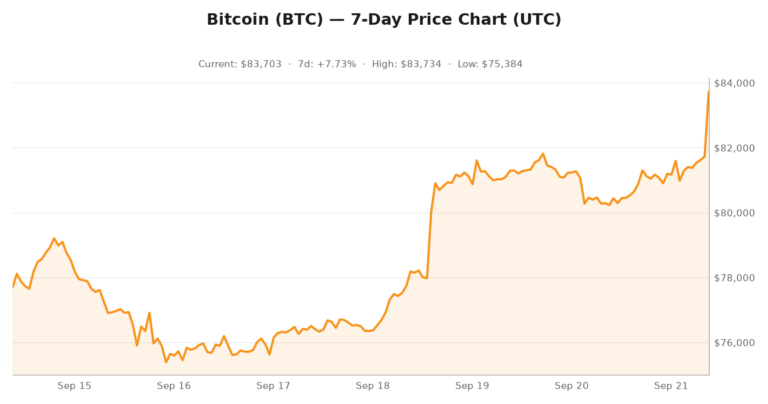
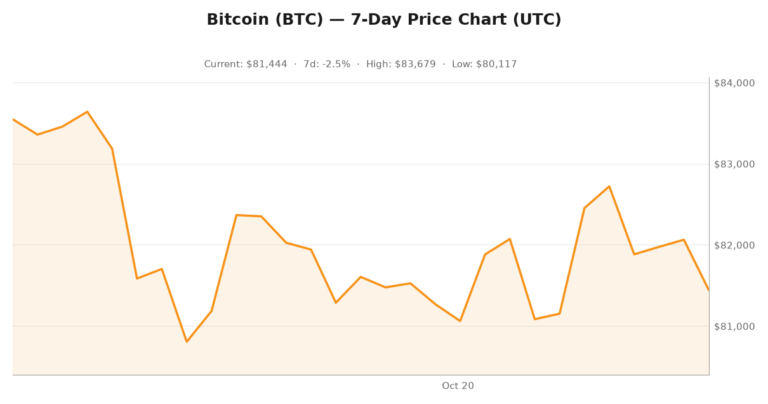
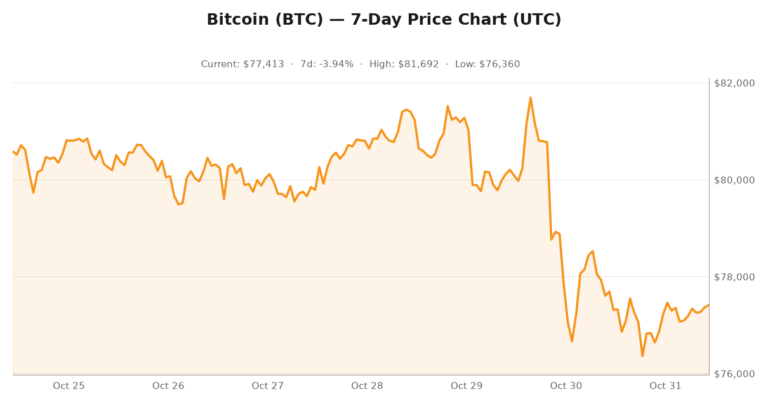
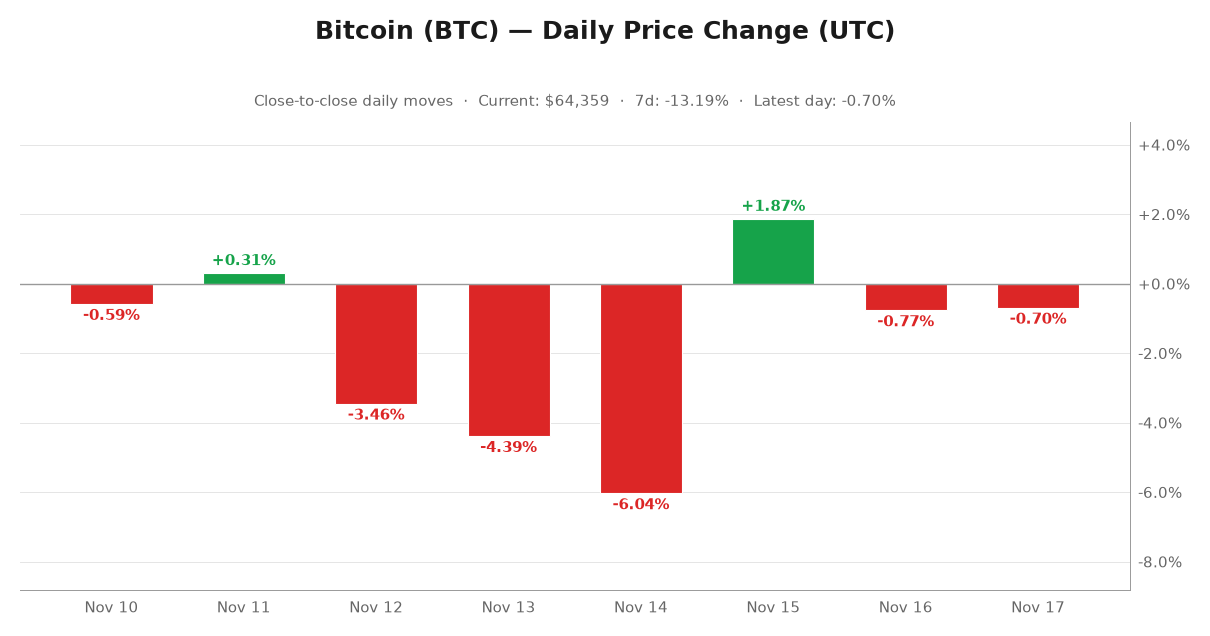
Bitcoin has given up about 24% of its value since late September, sliding from a $84,427 close on September 26 to roughly $64,300 this week, and the argument has predictably settled on price. Wintermute told CoinDesk that BTC could slide into the $50,000s as Fed rate hike bets build. Nvidia’s turmoil is adding pressure on top of that, and CoinGecko still shows Bitcoin dominance at 59.1% inside a $2.19 trillion total market cap.
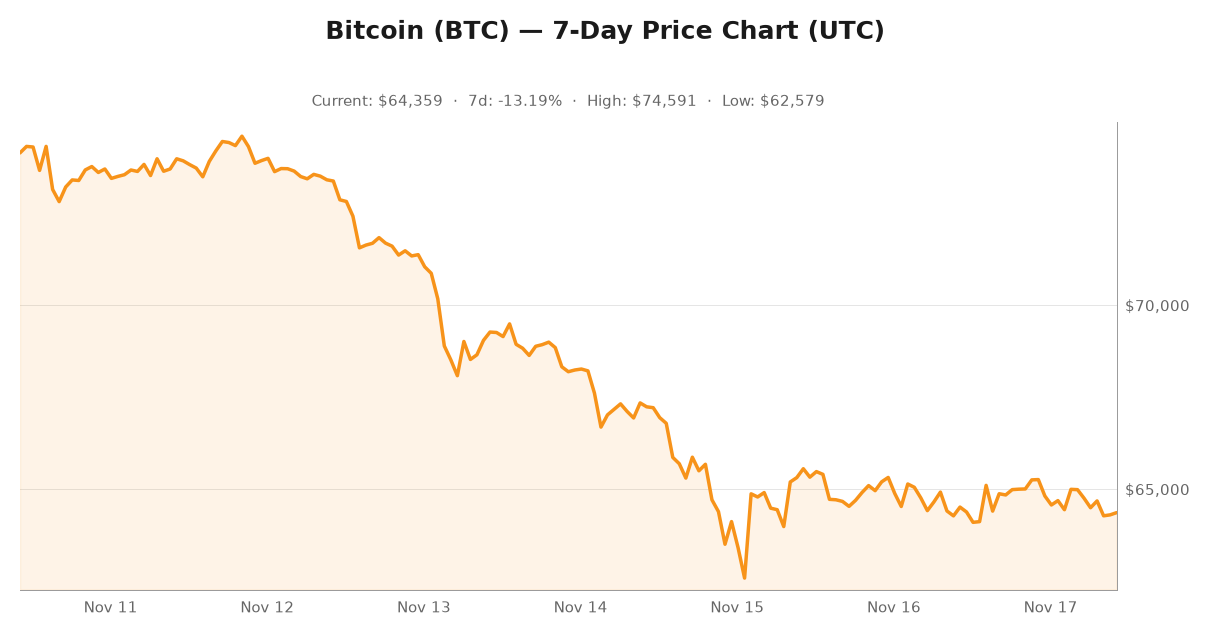
That is the wrong fight. Prices are noisy and everybody already has a view on the drawdown. The more interesting question hiding inside this seven-week selloff is where capital actually went, and the answer is not what either side of the debate expects.
A drawdown is a filter. It strips out price beta and leaves behind the flows that were real. Run that filter over the two competing claims on this asset’s future — Bitcoin-native DeFi and layer-2 networks — and the numbers say something uncomfortable for both of them.
The Bitcoin scoreboard nobody publishes
Start with the snapshot. According to DeFiLlama on November 17, 2026, the total value locked across every Bitcoin-linked network looks like this:
- Bitcoin mainnet: $3.41 billion
- Rootstock: $56.1 million
- Stacks: $52.5 million
- BOB: $4.6 million
- Bitlayer: $411,153
- Botanix: $0
- Mint: $0
Add up every sidechain and layer-2 network in that list and you land near $113.5 million. Bitcoin’s mainnet DeFi layer is roughly 30 times the entire Bitcoin L2 ecosystem combined. That alone should have retired the idea that this chain has no DeFi, only that the DeFi it has is not the kind most people picture when they hear the word.
Now strip out the price
Almost all of that $3.41 billion is denominated in BTC, so of course it falls when BTC falls. To see anything real you have to convert everything to satoshis.
The mainnet DeFi layer held $4.48 billion on September 26, when BTC closed at $84,427. That is 53,083 BTC. Today the same layer holds $3.41 billion against a $64,340 spot price, which is 53,009 BTC. Seven weeks later, after a 24% price collapse, the BTC-denominated size of the whole layer is down 74 BTC, or 0.14%. Flat. Not down. Not expanding. Flat.
Now run identical math on the sidechains. On September 28, Stacks at $88.8 million, Rootstock at $85.9 million and BOB at $10.4 million together held $185.1 million, or about 2,218 BTC. Today those same three networks hold $113.5 million, or roughly 1,764 BTC.
That works out to $71.6 million of capital genuinely leaving, and a 20.5% shrink measured in Bitcoin rather than dollars. This is the part that survives the price filter. The sidechain losses are not the drawdown. They are a capital exodus hiding inside it.
Which means the popular framing is backwards. The L2 boom is not a bullish story the drawdown interrupted; it is a story that was already unwinding. And the native layer is not exploding either. It is a mirror that happens to be pointed at the price.
How to run the filter yourself
- Pull daily chain TVL history from DeFiLlama for the main chain and every sidechain you care about.
- Divide each snapshot by the BTC close on that same date to convert the TVL into satoshis.
- Compare the BTC-denominated change across the window. Anything that falls faster than the price is real outflow.
Do that for the mainnet layer and it comes out flat. Do it for the sidechains and it comes out as a 20.5% bleed. Same method, opposite conclusions.
Why $2.68 billion in Babylon is just the price
Composition matters more than the headline total, so here is everything counted on the Bitcoin chain, minus centralized exchange balances:
- Babylon Protocol (BTC restaking): $2.68 billion
- GTBTC (restaked BTC): $223.7 million
- Lightning Network: $205.9 million
- B2 Buzz (bridge): $51.2 million
- BitSafe CBTC: $3.1 million
- Zeus Network: $1.5 million
- Lorenzo stBTC: $21,994
- Chakra: $17,922
- Stroom: $16,891
Babylon alone represents 78.5% of everything counted as DeFi here. That is not a diversified ecosystem; it is one protocol plus a long tail of rounding errors. And Babylon is not DeFi in the composable, permissionless sense people mean when they say it. It is BTC locked in staking contracts and issued against BABY tokens. Its TVL is a BTC-denominated wrapper, which is exactly why the number mirrors the price instead of leading it.
Only one other line item is genuinely worth arguing about: Lightning, at $205.9 million tracked by DeFiLlama, is roughly double Stacks and Rootstock combined. Hold on to that number. It is the whole layer-2 debate in one line.
The one place fresh capital showed up
Strip out the wrappers and there is very little flowing into native structures. One number moved the other way, and it is the most bullish data point in this entire story.
Maple’s Bitcoin lending book went from $1.81 billion on November 11 to $1.68 billion on November 17. In dollars that looks like an outflow. In BTC it is the opposite: 24,491 BTC became 26,034 BTC, a 6.3% increase in BTC-denominated credit over six days while the price fell from $73,928 to $64,340. Maple’s overall TVL rose 4.8% over the same week even as BTC dropped double digits.
That is real money, and it is the shape of what actually works on this chain in 2026: not apps, not rollups, not composable money legos. Credit. A lender accepting BTC collateral and writing a loan against it needs covenants, a servicer and a counterparty. It does not need a smart contract environment, or a speculative token to bootstrap one.
Why every layer-2 network bled
Strip the price out of each sidechain decline and the pattern is unambiguous. Stacks fell from $88.8 million to $52.5 million. Rootstock from $85.9 million to $56.1 million. BOB from $10.4 million to $4.6 million, a 56% collapse. Every one of them lost more than the 24% the market lost, which means every one of them lost capital on top of price.
The reason is structural, and it comes down to a single design decision: a rollup asks users to leave. To use Stacks you need STX. To use BOB you need BOB. To use Rootstock you need RIF. Leaving is fine on Ethereum, where the exit token is the most liquid asset in crypto. On Bitcoin, the exit token is a thin sidechain token, and leaving means surrendering the exact asset you came for. So users do not leave. They simply never arrive.
Lightning works precisely because it never asks. No token, no sequencer, no bridge, no exit. You stay on the base chain and your coins move over a second layer. The one Bitcoin second layer that did not demand an exit asset is also the only one holding a balance worth mentioning. That is not a coincidence, and it is not a technicality. It is the entire thesis.
What this means for the Bitcoin thesis
Two honest conclusions, neither of which is a price call.
The bull case: the drawdown did not break the native capital stack. While the sidechains shed 454 BTC, the mainnet layer held within 74 BTC of where it started. If you worried that this DeFi layer was a house of cards built on paper tokens, the data says it is mostly BTC sitting still.
The bear case: flat is not growing. Zero net new BTC entered the native layer in seven weeks. One credit book expanded, everything else shrank in lockstep with the price. And the layer-2 thesis, the thing that was supposed to capture Ethereum’s developer gravity, is leaking roughly $10 million a week in real capital. If you are hunting for a reason to bid here, this data is not it.
So watch BTC-denominated TVL on the main chain rather than the dollar figure. Watch whether Maple’s book keeps expanding. Watch whether the sidechains ever stop bleeding satoshis. For price, the week ahead is crowded: FOMC minutes, Nvidia earnings and Russian retail crypto rules all land in the same stretch, and Cointelegraph flags BTC tagging an 18-week low into it, while the same outlet tracks how Nvidia turmoil is testing miners’ AI funding plans.
The bottom line
Bitcoin’s layer-2 networks lost $71.6 million of real capital in seven weeks, 454 BTC or a fifth of their entire footprint, while the native layer stayed flat to within 0.14% and was carried almost entirely by one restaking protocol and one institutional credit book.
The Bitcoin L2 era was a 2020 to 2024 story, and the data says it is over. The working model in 2026 is BTC-denominated yield, BTC-denominated credit, and exactly one payments layer that never asked you to leave. Judge the ecosystem in satoshis instead of dollars and the picture changes completely.