Bitcoin’s Fee Hijack Flaw: What Electrum’s Patch Reveals
Most crypto security headlines are easy to ignore. An exchange loses a rounding error, a bridge gets exploited for a few million, a wallet developer ships a routine update. This week’s Electrum patch does not look like that on the surface, and that is exactly why it deserves more attention than it got.
Electrum patched a flaw that let rogue servers hijack Bitcoin fee bumps. No funds were drained en masse. No protocol broke. Nothing burned. And yet this is arguably the most consequential security story of the month for anyone who holds Bitcoin outside a custodial account, because the failure mode is not a spectacular exploit. It is a slow, boring leak running on the one machine where you were supposed to own every key yourself.
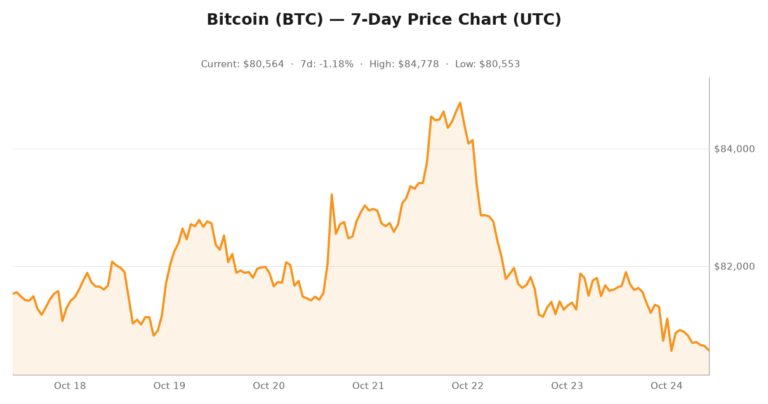
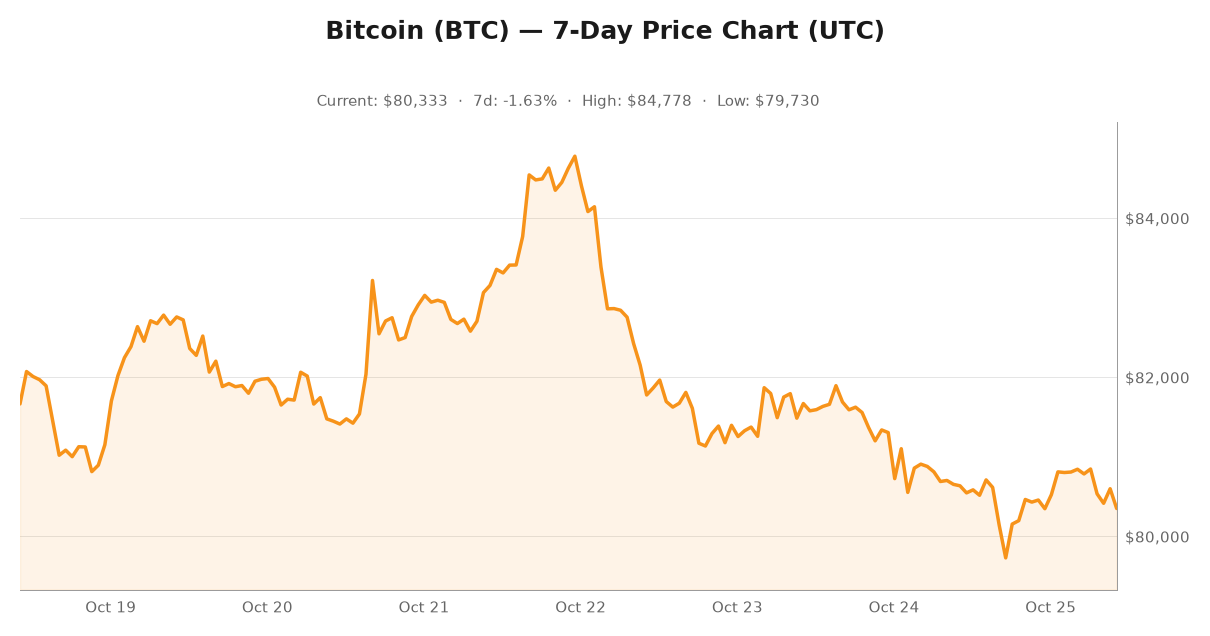
To understand why this lands in late October 2026 instead of some forgotten corner of 2023, you need to look at what Bitcoin’s market has been doing. The asset has been pinned in a compression regime. The 30-day trading range has narrowed to roughly 6% from 13%, with price chopping between $80,000 and $86,000. Bitcoin traded near $80,300 over the past 24 hours while total crypto market cap sat around $2.68 trillion. When a $2 trillion asset refuses to move, the only leaks left are operational ones.
What the Electrum Flaw Actually Was
Electrum is a lightweight Bitcoin wallet. Instead of downloading and validating the entire blockchain itself, it asks a remote server — usually one of Electrum’s own, sometimes your own node — for chain state, and it broadcasts transactions through that same server. That design is exactly why Electrum is fast. It is also why a hostile server gets a vote on what your wallet does next.
How a fee bump actually works
When a transaction looks stuck, the wallet offers to bump the fee. To do that, a server builds a replacement transaction: same inputs, higher fee, deliberately conflicting with the original so only one of the two confirms. The client signs it and broadcasts it. The fee is the gap between the two versions, which means the server effectively proposes how much of your money gets burned to get into the next block.
The flaw, per the patch that shipped this month, was that the client did not properly bound or independently verify the fee increase a server proposed. A rogue server could answer a routine fee-bump request with a replacement carrying a fee far above what the user intended to pay, and the gap between “reasonable” and “absurd” can be small enough that most people approve the prompt without reading it. Electrum’s release notes and project announcements are the authoritative place to confirm the fixed version and the minimum safe upgrade.
Why a second patch in three weeks matters
Two details make it worse. First, this is the second Electrum security patch in under a month. On October 2, the project patched a Lightning-related flaw in the wallet that also broke some older Bitcoin backups. Two patches in 23 days is a pattern, not an accident. Second, fee bumps trigger precisely when a transaction is stuck, which is precisely when a human is distracted, impatient, and clicking fast. Attackers do not get to choose the worst moment for you. Your wallet chooses it for them.
Why a 6% Range Turns a Small Fee Into a Big Loss
Here is the arithmetic that makes this more than a wallet-fiddling story.
- Bitcoin at $80,000 with a 30-day range of 6% means the entire range is roughly $4,800 of price movement.
- A single 0.5% fee overpayment on that notional is $400 — about 8% of the whole monthly range.
- Double it to 1% and you have burned $800, roughly a sixth of the range, to fix a transaction that should have cost a few dollars.
Now put that next to the market backdrop. Bitcoin ETFs shed $773 million across two sessions even as on-chain signals continued to show accumulation. A CoinDesk roundup covered research from DWF showing ETF flows increasingly trail price moves rather than lead them. The Fed statement lands at 1 p.m. ET, with inflation prints and Treasury yields doing the heavy lifting for direction. Peter Schiff is still calling $75,000. Meanwhile Cointelegraph is tracking a market that cannot find a direction at all.
In that regime, passive flows will not rescue anyone. When price has no trend and no volatility to harvest, the only returns left in your account are the ones nobody else can see: what you paid in fees, what you paid in spread, what quietly leaked out of a wallet you assumed was fully under your control.
The Word “Trustless” Is Doing Too Much Work
This is the part worth sitting with. Bitcoin’s core pitch is trustlessness: no bank, no clearing house, no counterparty who can freeze your balance or reverse your payment. That is real at the protocol layer. The settlement system is genuinely trustless.
The moment you install a wallet, trust comes back. It simply moves from institutions to software:
- Server trust. Who tells your wallet your balance, your pending transactions, and whether something is “stuck”?
- Fee trust. Who decides what a replacement transaction costs — and did you check?
- Replacement trust. Who builds the transaction your keys are about to sign?
- Update trust. A patch only protects you if you install it. The wallet you never update is the wallet still carrying the flaw.
- Privacy trust. Every server you talk to sees your IP address and your transaction graph. Electrum’s lightweight model and its Lightning plugin, which we covered in detail in our look at the Lightning plateau, both depend on that server relationship.
Bitcoin did not eliminate trust. It eliminated the most dangerous kind of trust and replaced it with a kind you have to actively maintain. Most people never do. They install a wallet once in 2021 and stop thinking about it for five years. Ask any long-term Bitcoin holder who has actually run a node and they will tell you the same thing: the moment you take the keys off a custodial platform, you become the security team.
What the Patch Fixed, and What It Did Not
What actually got fixed
Credit where it is due: the fix appears to tighten how fee-bump replacements are validated and bounded on the client side instead of trusting the server’s number. That is the correct direction of travel. Validation moved back onto the machine holding the keys.
What did not get fixed
What it does not do:
- It does not stop a server from seeing your IP address and your transaction pattern.
- It does not stop a malicious server from serving a stale or fabricated chain state — the classic balance-inflation trick, a different attack with the same root cause: you are trusting somebody else’s view of the chain.
- It does not protect anyone still running an older release. Unpatched wallets remain exploitable, and attackers pick off old versions deliberately.
- It does not remove the server dependency at all. That is architectural. Only running your own node changes it.
The Playbook: Five Steps Before You Move Another Coin
- Update everything today. Not just the wallet making the news — every wallet that holds or signs for funds, including cold keys used only for signing. Compare release notes against the advisory before reinstalling.
- Run your own node, or at least connect to one you control. It converts “trust the server” into “trust my own validation.” Bitcoin.org’s full node guide is the reference most people start with.
- Read the fee before you sign any replacement. Cross-check the proposed fee against a public mempool view such as mempool.space. If a bump asks for multiples of the going rate, stop and investigate.
- Verify outputs on the device screen, not the desktop preview. If you use a hardware wallet, the signing device display is the only one you should trust. That is the entire reason the device exists.
- Test with a trivial amount first. Send a small payment through the exact same path before moving anything meaningful. It costs cents and it shows you precisely what the flow looks like.
The Bigger Pattern Nobody Wants to Say Out Loud
Here is the uncomfortable part. On the same tape this month, Tether announced backing from 15 Bitcoin mining firms for AI-driven automation tools. The industry’s sharpest capital is flowing into optimizing revenue — hash efficiency, power procurement, treasury execution — while the wallet layer, the layer that actually holds user keys, quietly ships security fixes over a weekend.
It is also worth noticing where friction pushes people. Bitcoin’s user base did not disappear when exchanges offered one-click buys; it went quiet. Every point of wallet-level insecurity nudges users toward custodial apps and regulated interfaces, where this exact attack does not exist, because in those apps somebody else holds the keys and carries the risk. That is the paradox of Bitcoin’s sovereignty premium. It comes with a support bill, and most holders quietly stop paying it.
The counter-argument is fair. This was an edge case, now patched, in a wallet with a meaningful installed base but a shrinking one among long-term holders who mostly moved to hardware workflows years ago. Fine. But the pattern is what generalizes. Bitcoin’s largest remaining security risks do not live in the protocol. They live in client software that most people treat as if it were part of the protocol. Bitcoin’s security perimeter is the wallet, not the ledger.
Bottom Line
Bitcoin’s 2026 regime has been defined by compression: a 6% monthly range, ETF flows that lag price, a Fed decision that moves more than any on-chain metric, and a market where two well-known bears and one prominent bull are all pitching $75,000. In that kind of market, edge does not come from picking the right direction. It comes from not bleeding.
The Electrum patch is good news and deserves a quiet, boring round of applause. The more useful takeaway is this: with Bitcoin trading in a narrow band and with wallet infrastructure carrying risks the protocol never covers, the difference between a good year and a bad one may simply be whether your own stack was quietly leaking while everyone else argued about the Fed. Bitcoin was never going to protect you from the market. It can protect you from the basics, as long as you actually install the patch.
Update the wallet. Then go back to watching the tape.