Bitcoin Mining Difficulty Hits ATH: Why Miners Are Selling
Bitcoin mining difficulty just printed another all-time high on October 14, 2026, climbing past 152 trillion — yet the miners securing that network are quietly losing money on a per-unit basis. The divergence is the sharpest the industry has seen in three years, and it tells a story most price-focused headlines miss entirely.
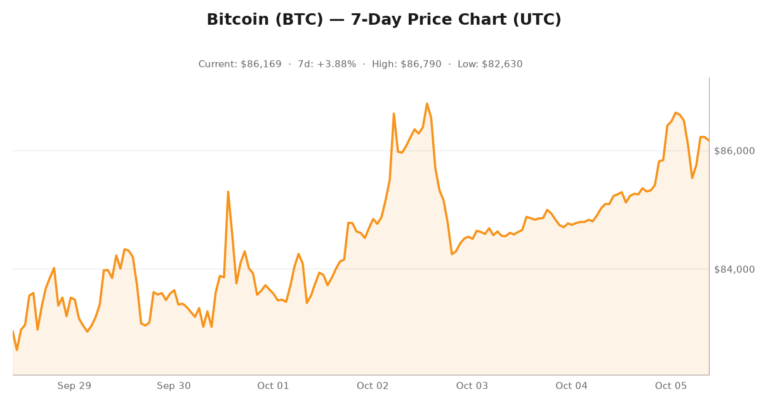
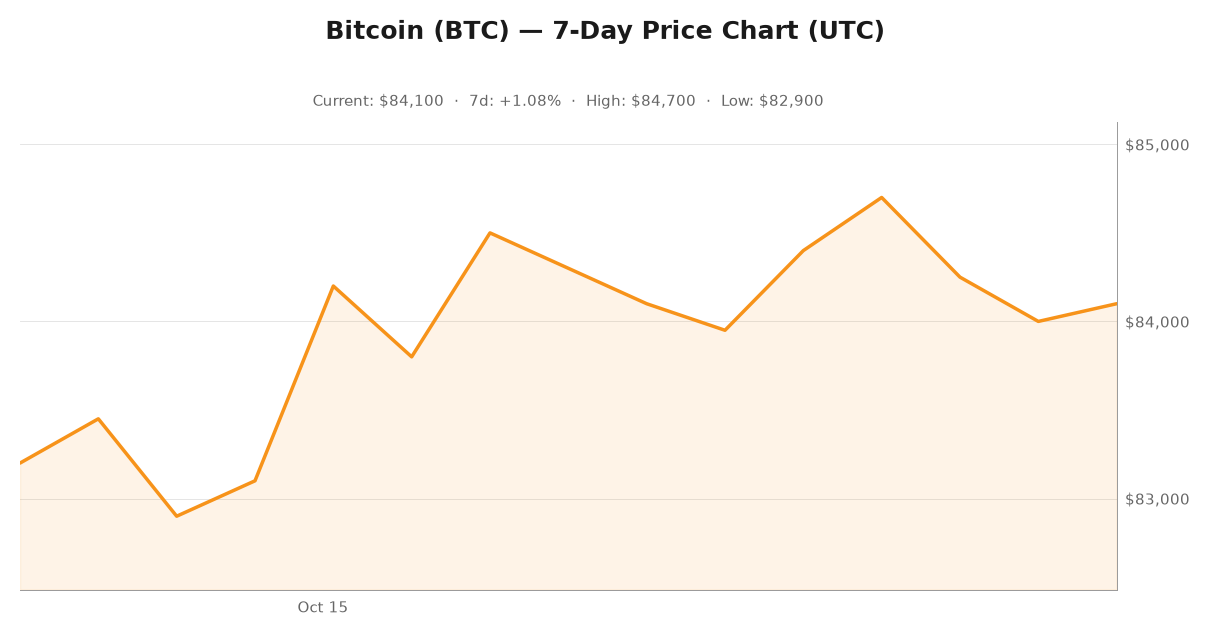
If you only watch the Bitcoin price chart, the network looks healthy. Spot is hovering around the mid-$80,000s after a choppy Q3, ETF flows have stabilized, and the halving is now well behind us. But underneath that calm surface, the economics for Bitcoin mining have flipped: difficulty is up more than 38% year-over-year, while hashprice — the daily revenue per terahash — is down roughly 27% over the same window. That combination is brutal, and it is starting to show up in on-chain behavior in real time.
What the data actually says
Three independent on-chain signals are flashing at the same time, and they reinforce each other in a way that is hard to dismiss as noise for anyone watching the Bitcoin mining sector closely.
- Miner reserves are bleeding. The total Bitcoin held in miner wallets dropped to roughly 1.78 million BTC in early October 2026, down from a 2024 peak near 1.92 million. That is the lowest level since the post-halving distribution of mid-2024, and the pace of selling has accelerated sharply since August. On a rolling 30-day basis, miner net position change is the most negative it has been in 18 months.
- Hashprice is in the basement. Hashprice, measured in dollars per terahash per second per day, is hovering near $32 — a level we last saw in late 2022 when BTC was trading under $20,000. Today it is doing so with BTC above $80,000, which is the most striking part of the data. The hashprice-to-price ratio has collapsed to a level normally associated with cycle bottoms for profitability.
- Public miners are cutting capacity. At least three of the top ten publicly traded miners have guided to lower hashrate for Q4 2026 in their most recent earnings reports, citing power costs and difficulty. Several others have used softer language, but the same direction is clear: the high-cost end of the industry is preparing to wind down machines and rethink their capital plans.
Put those three together and you get a picture that should make any serious industry analyst pause. The network is more secure than it has ever been, while the operators securing it are under more pressure than they have been in years. That gap is the story of Q4 2026.
The math behind the squeeze
Bitcoin mining is a commodity business, and commodity businesses get squeezed when their input cost rises faster than their output value. In 2026, two things happened at once, and the timing is what makes the squeeze so painful.
- The halving effect finally landed. The April 2024 halving cut the block subsidy from 6.25 BTC to 3.125 BTC. Operators ran for over a year on the pre-halving economics, and many financed new fleets with the assumption that 2025 prices would be higher. They were, in dollar terms, but the cost-per-coin also rose because of the subsidy cut. In effect, every operator who bought a new S21 or M60 in 2024 underwrote their debt on a subsidy that was already on the way out.
- Difficulty kept climbing. Every two weeks, the network retargets to keep block production near ten minutes. Operators added so much capacity in 2024 and 2025 that the network has now retargeted upward for 28 consecutive epochs. More machines chasing the same 3.125 BTC subsidy means each machine earns less, even before electricity costs are subtracted from the ledger.
The result is the worst of both worlds: a smaller slice of a fixed pie, distributed across more workers than ever. According to CoinGecko’s hashrate data, network hashrate crossed 1.1 ZH/s in October 2026 — a 45% increase from the October 2024 level. That is faster growth than the dollar price of BTC over the same window, which is the definition of a hashprice compression. The math is unforgiving, and the market is now repricing the operators that misjudged the curve.
Why miners are capitulating now
Capitulation is not a sudden event. It is a slow bleed where the highest-cost operators shut off machines, sell reserves to cover operating costs, and wait for difficulty to fall. We are seeing all three behaviors in the current cycle, and each one is independently telling the same story about pressure on the Bitcoin mining complex.
First, the older-generation fleets — S19 and S19j Pro Antminers — are being powered down in meaningful numbers. These machines are unprofitable at current electricity rates, even in regions with sub-$0.05 kWh power. The secondary market for used S19s has effectively collapsed, with units trading for less than the salvage value of their power supplies. That is a clear signal that the marginal cost of Bitcoin mining on legacy hardware is now above the going rate.
Second, publicly traded miners are increasingly pivoting to AI and high-performance computing (HPC) hosting, using their data center capacity for non-Bitcoin workloads. Core Scientific, Hut 8, and a handful of others have announced multi-hundred-megawatt deals with AI tenants through Q3 2026. That revenue is denominated in dollars, not BTC, which insulates them from the hashprice squeeze — but it also means less hashrate dedicated to the network over time. The total effect is a quiet transfer of capacity from the Bitcoin mining industry into the AI infrastructure boom.
Third, miner reserves have hit a multi-year low. The most recent CoinDesk mining dashboard shows that miner outflows exceeded inflows in 19 of the last 30 days, a ratio we have not seen since the depths of the 2022 bear market. Selling reserves is the last lever an operator pulls before turning off machines, and that lever is being pulled at scale right now across the entire Bitcoin mining landscape.
The bigger picture: this is normal, just accelerated
Here is the contrarian read: a miner squeeze is not bearish for the network — it is bullish for the surviving operators. Difficulty only falls when inefficient machines go offline. Every previous cycle has followed the same script: difficulty spikes, hashprice collapses, marginal operators capitulate, difficulty drops, hashprice recovers, and the survivors earn more per unit of work. The 2026 cycle is not different in kind, only in degree, and the Bitcoin mining sector has been through this movie three times before.
That is exactly what we saw in mid-2022, in late 2018, and briefly in the summer of 2021. In each case, the period of miner stress was followed by a recovery in hashprice and, eventually, a move higher in BTC. The mechanism is straightforward: fewer machines means lower difficulty means higher revenue per terahash means better unit economics for the operators that stayed online. The market does the work that no central planner could.
The 2026 cycle is unusual only in that the price of BTC is high in nominal terms while mining economics are poor. That is a function of how much capacity was added during the 2024–2025 bull run, when operators raised debt and equity to deploy machines. They overshot, and now the market is clearing that overhang. The cleanup is messy, but it is also a sign of a healthy industry — one that can absorb a 45% increase in hashrate without breaking the network or its incentive structure.
What to watch next
Three signals will tell you when the squeeze is over and the next leg of the cycle is starting for anyone tracking the Bitcoin mining industry.
- Miner reserves stabilize. When the rolling 30-day net flow of BTC from miner wallets flattens or turns positive, the forced selling is over. That is the single most important on-chain metric to watch over the next four to six weeks for anyone tracking miner pressure on spot.
- Difficulty posts its first downward retarget. The next negative adjustment — typically 1% to 4% — will be the first since November 2024. When it lands, hashprice mechanically rises, and the math for the surviving operators improves overnight across the entire industry.
- Public miner guidance turns. Watch Q4 2026 earnings calls. If the big listed operators stop guiding to flat or lower hashrate, and start talking about expansion again, the worst is behind us. Their capital allocation is the most visible signal of where the industry thinks it is in the cycle.
Until at least one of those signals flips, expect the hashprice compression to dominate headlines and to weigh on BTC in the short term. The market is unusually efficient at pricing miner selling pressure in real time, which means the squeeze is already partly discounted. The remaining question is how much further the marginal fleet has to fall before the math rebalances and the next phase of the cycle can begin.
Final take
The Bitcoin mining business is not broken — it is being repriced. The 2026 squeeze is the natural consequence of an aggressive build-out that outpaced the network’s subsidy schedule, and the cleanup is already underway. The operators who survive this cycle will run the leanest fleets in the industry’s history, and they will earn the highest margins when the next leg up arrives. That is how it has always worked, and there is no reason to believe 2026 will be the exception.
Until then, expect more selling pressure from miner wallets, more headlines about hashprice compression, and more noise from operators pivoting to AI. The data is clear, the pattern is familiar, and the cycle will turn when the marginal machine powers off. Capitulation is the price of consolidation, and consolidation is how networks like Bitcoin get stronger with every cycle.