Breaking Down Bitcoin Layer 2: February 2026 Edition
As Bitcoin consolidates above the $68,000 mark in late February 2026, a familiar narrative of scarcity and store-of-value is being eclipsed by a more dynamic story. The real action, and arguably the most significant value accrual, is shifting to the ecosystem being built atop the bedrock protocol. With the Bitcoin network itself processing a finite number of transactions, the explosive growth in utility, user adoption, and developer activity is being funneled into a vibrant and competitive landscape of scaling solutions. This is the world of Bitcoin Layer 2 networks, and as of February 2026, it has matured from an experimental concept into a multi-billion dollar engine of innovation. This article breaks down the state of the ecosystem, its key players, and what it means for the future of the world’s premier cryptocurrency.
The State of the Market: A Fertile Ground for Layer 2s
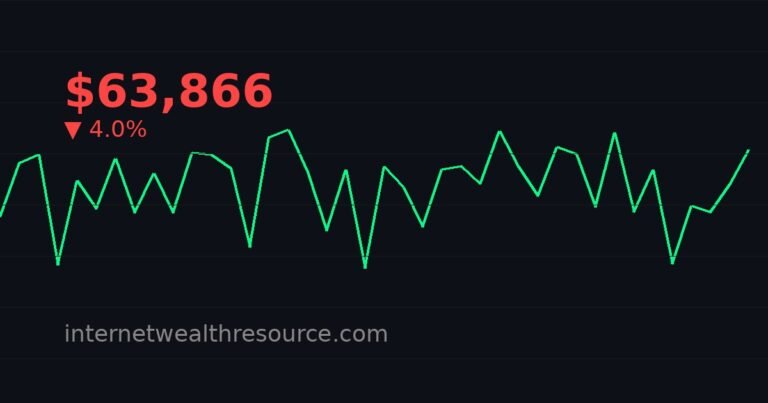
Bitcoin’s current price of $68,557, with a robust 24-hour trading volume exceeding $59 billion, reflects strong institutional and retail confidence. This high valuation and network congestion create a perfect economic incentive for Bitcoin Layer 2 solutions. High on-chain fees make micro-transactions and frequent swaps prohibitively expensive on the base layer, pushing demand for cheaper, faster alternatives. The total value locked (TVL) across major Bitcoin L2s has surged past $15 billion, a clear signal that capital is not just holding BTC, but actively deploying it within these new financial primitives. This growth is no longer speculative; it’s driven by tangible use cases like instant payments, decentralized finance (DeFi), and asset tokenization.
Architectural Evolution: From Sidechains to Sovereign Rollups
The technological landscape of Bitcoin scaling has diversified significantly. We can now categorize the main approaches:
- State Channels (Lightning Network): Still the dominant force for instant, high-volume micropayments. Network capacity has grown exponentially, with major payment processors and social media platforms integrating it as a default feature.
- Sidechains: Chains like Stacks (which introduced smart contracts via Clarity) and Rootstock (RSK) continue to evolve, offering EVM-compatibility and a bridge for Ethereum developers to build on Bitcoin-secured chains.
- Rollups & Data Availability Layers: The most groundbreaking development. Projects like Bitcoin Layer 2 rollups (both ZK and Optimistic) are now live, leveraging Bitcoin’s block space for data availability while executing transactions off-chain. This combines Bitcoin’s security with Ethereum-like programmability.
- Bitcoin Virtual Machine (BVM) Ecosystems: A new paradigm where modular components let developers launch their own purpose-specific L2s, creating a constellation of app-chains secured by Bitcoin.
Security Models: The Trust Spectrum
Not all L2s are created equal, and their security assumptions are critical for investors. Sidechains often have their own validator sets, which some argue reduces the direct security inheritance from Bitcoin. In contrast, modern rollups that post data and proofs directly to the Bitcoin blockchain are considered more secure, as their validity is enforced by the full Bitcoin network. Understanding this spectrum—from economically secured sidechains to cryptographically secured validity proofs—is essential when evaluating where to allocate capital.
Investment Landscape: Opportunities and Pitfalls
For investors, the Bitcoin Layer 2 space presents a high-risk, high-reward frontier. The opportunities are vast: early token investments in promising L2 native tokens, yield farming in nascent DeFi protocols, and accumulating governance tokens for emerging ecosystems. The recent +4.60% surge in Bitcoin’s price often has a magnified, positive effect on L2 token valuations.
However, the bearish perspectives are equally important. This remains a nascent field with significant risks:
- Technical Risk: New cryptographic implementations and bridge technologies are prime targets for exploits. A single major hack can collapse confidence in an entire ecosystem.
- Regulatory Uncertainty: How regulators classify wrapped BTC on L2s or L2-native tokens could impact growth.
- Ecosystem Fragmentation: Liquidity is currently scattered. The “winning” L2s have yet to be definitively crowned, and betting on the wrong horse could mean capital stagnation.
- Bitcoin Maximalist Skepticism: A significant portion of the Bitcoin community views complex smart contracts as unnecessary bloat, preferring the base layer’s simplicity and security.
Actionable Insights for 2026 and Beyond
Navigating this space requires a strategic approach. Here are actionable steps for informed participants:
- Diversify Across Architectures: Don’t put all your funds into one type of L2. Allocate small portions across a state channel (Lightning), a sidechain, and a rollup to gain exposure to different use cases and risk profiles.
- Focus on Fundamentals, Not Hype: Evaluate projects based on their developer activity, unique technology, TVL growth (in BTC terms, not just USD), and the strength of their partnerships. A strong, building community is a key indicator.
- Practice Safe Bridging: When moving assets from Bitcoin to an L2, use official, audited, and time-tested bridges. Consider bridging in smaller amounts and verify transaction finality times.
- Engage with Governance: For long-term holds, participating in governance of a Bitcoin Layer 2 can provide insight into the project’s direction and offer potential staking rewards.
The Road Ahead: Bitcoin’s Multi-Layer Future
Looking forward, the trajectory is clear. Bitcoin is evolving into a multi-layered financial stack. The base layer ($1.37 trillion market cap) will act as the ultimate settlement and value reserve, while a thriving ecosystem of Bitcoin Layer 2 networks will handle the vast majority of transactional volume and programmatic complexity. We can expect increased interoperability between different L2s, the rise of Bitcoin-native stablecoins, and sophisticated DeFi products that rival those on other chains—all secured ultimately by Bitcoin’s proof-of-work.
The convergence of Bitcoin’s unparalleled security with the innovation of scalable execution layers is creating a new paradigm. For developers, users, and investors, understanding this shift is no longer optional. The Bitcoin of February 2026 is not just a digital gold; it is the foundation of a rapidly expanding, decentralized internet of value, and its Layer 2s are the building blocks of that future.