Zero Knowledge Proof — A No-Nonsense Overview for Investors
Opening Paragraph
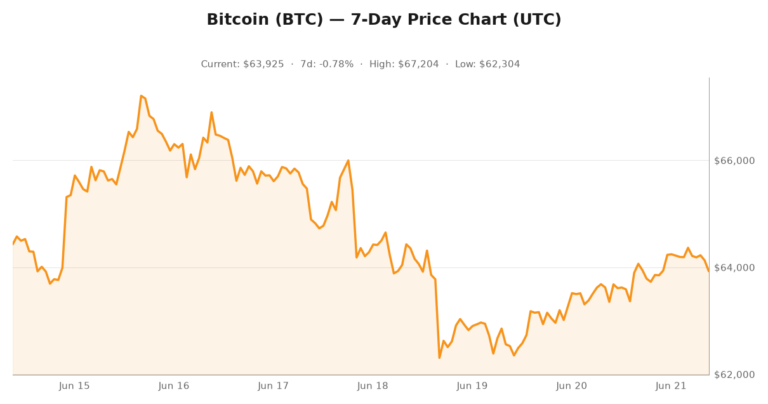
In a market where Bitcoin’s price can swing thousands of dollars in a single day, as evidenced by its current range between $66,462 and $69,789, the foundational technologies that promise to secure the next generation of digital assets often get lost in the noise. Yet, for investors navigating this volatile landscape, understanding these core innovations is not academic—it is a critical component of risk assessment and opportunity identification. Zero-Knowledge Proofs (ZKPs), a cryptographic concept once confined to research papers, have emerged as the most potent force shaping the scalability, privacy, and interoperability of blockchain networks. Their maturation from theory to deployable technology represents a fundamental shift in what blockchains can do, moving them beyond transparent ledgers into systems capable of verifying complex computations without revealing underlying data. This evolution carries profound implications for investment theses built on transaction speed, user adoption, and regulatory compliance.
Background/Context
At its core, a Zero-Knowledge Proof is a cryptographic method by which one party (the prover) can prove to another party (the verifier) that a given statement is true, without conveying any information beyond the validity of the statement itself. Imagine proving you know the password to an account without ever typing the password, or verifying you have sufficient funds for a transaction without revealing your balance or the counterparty’s details. This ability to separate verification from disclosure solves two of blockchain’s most persistent trilemmas: privacy and scalability.
The journey of ZKPs began in the 1980s in theoretical computer science, but their practical application in cryptocurrency started gaining traction with the launch of Zcash in 2016, which utilized a form of ZKP called zk-SNARKs to enable shielded transactions. The breakthrough for scalability, however, came with the development of ZK-Rollups. These are Layer 2 scaling solutions that bundle hundreds of transactions off-chain, generate a single cryptographic proof of their validity, and post that proof to the underlying blockchain (like Ethereum). This allows the main chain to secure the transactions while only processing a tiny fraction of the data, dramatically increasing throughput and reducing costs. For investors, this transition marks a move from valuing raw blockchain throughput to valuing cryptographic efficiency and security guarantees.
Main Analysis
The investment thesis for Zero-Knowledge technology is built on three interconnected pillars: scalability solutions, enhanced privacy, and interoperability. First, scalability is the most immediate and measurable impact. Ethereum’s high gas fees during periods of congestion have historically acted as a tax on innovation and a barrier to mass adoption. ZK-Rollups, deployed by ecosystems like StarkNet, zkSync, and Polygon zkEVM, directly address this by offering transaction finality with Ethereum-level security at a fraction of the cost. The total value locked (TVL) in these Layer 2 networks has become a key metric for gauging adoption, and their growth signals a migration of economic activity to these more efficient layers. An investor analyzing a decentralized application (dApp) must now consider not just its utility, but the ZK-Rollup it’s built upon, as the underlying technology dictates its user experience and cost structure.
Second, privacy is evolving from a niche feature to a regulatory and commercial necessity. While Bitcoin and Ethereum offer pseudonymity, their transparent ledgers are a liability for enterprises and individuals requiring financial confidentiality. ZKPs enable confidential transactions and private smart contracts, opening blockchain technology to sectors like institutional finance, healthcare, and identity management. Projects focusing on privacy-preserving decentralized identity or compliant institutional DeFi platforms are leveraging ZKPs to create products that can operate within existing legal frameworks. This moves the narrative from “crypto for censorship resistance” to “crypto for efficient, private verification,” a far broader market.
Finally, ZKPs are becoming the linchpin for blockchain interoperability. Cross-chain communication has been plagued by security vulnerabilities, as seen in several high-profile bridge hacks. ZKPs offer a more secure alternative through light client verification and validity proofs. A ZK bridge can cryptographically prove the state of one chain to another without relying on a trusted third party. This technology is foundational for a multi-chain future where assets and data can move securely across ecosystems, reducing siloed liquidity and systemic risk. For a portfolio manager, the chains and applications that successfully implement robust ZK-based interoperability may become the central hubs of future cross-chain activity.
Market Context
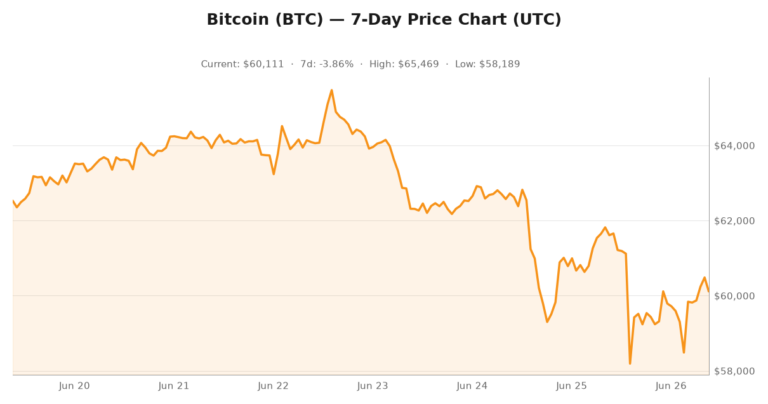
The current market environment underscores the urgency for the solutions ZKPs provide. As of today, Bitcoin trades at $66,355, reflecting a 24-hour decline of 4.66% amidst a broader market recalibration. This volatility, set against a substantial 24-hour trading volume of $49.6 billion, highlights a market that is intensely sensitive to macro factors and liquidity shifts. In such conditions, the long-term narrative for cryptocurrency adoption hinges on building infrastructure that is not only robust but also efficient and user-friendly. High transaction costs and network congestion during peak volatility events erode utility and deter new users.
The push for scalability, therefore, is not merely a technical pursuit but a commercial imperative. The price action of major assets like Bitcoin exerts gravitational pull on the entire digital asset ecosystem, influencing developer focus and capital allocation. When base-layer transaction costs become prohibitive, capital naturally seeks more efficient venues. This is the market force fueling the rise of ZK-Rollups and other Layer 2 solutions. Their value proposition becomes most apparent during periods of high network demand, precisely when the limitations of monolithic blockchains are laid bare. The day’s trading range, from a high near $69,789 down through support levels, is a microcosm of the stress tests that these scaling technologies are designed to withstand, ensuring decentralized applications remain usable regardless of market sentiment.
News Connection
Recent industry developments highlight the accelerating institutional and regulatory engagement with Zero-Knowledge technology. Just last month, a consortium of major global banks announced a pilot for a new settlement system using a private blockchain secured by ZKPs, aiming to reconcile transaction privacy with regulatory auditability. This move signals a clear path toward the adoption of ZK cryptography in traditional finance, validating its utility beyond public cryptocurrency networks. It suggests that the technology driving privacy on Ethereum may soon underpin the plumbing of Wall Street, creating a convergence point between decentralized and traditional finance.
Furthermore, the ongoing regulatory discussions in the United States and European Union around the Markets in Crypto-Assets (MiCA) framework and digital asset privacy have brought ZKPs to the forefront of policy debates. Regulators are grappling with how to balance the privacy benefits of ZKPs with Financial Action Task Force (FATF) travel rule requirements. This has spurred innovation in areas like “regulated DeFi” and programmable privacy, where ZKPs can be used to prove compliance (e.g., proving a user is not from a sanctioned jurisdiction) without exposing their entire transaction history. These news items demonstrate that ZKP development is no longer occurring in a vacuum but is directly responsive to the largest pressures facing the industry: institutional adoption and regulatory clarity.
Key Takeaways
* Zero-Knowledge Proofs are a foundational cryptographic innovation transitioning from theory to primary driver of blockchain scalability, privacy, and interoperability, with direct implications for network valuation and dApp adoption.
* The investment case for ZK technology is clearest in Layer 2 scaling solutions (ZK-Rollups), which are capturing economic activity by offering secure, low-cost transactions, making the choice of underlying ZK-Rollup a critical due diligence factor for application-level investments.
* Privacy-enhancing applications powered by ZKPs are moving from a niche concern to a necessity for enterprise and institutional adoption, opening new markets in identity, compliant finance, and data verification.
* Recent news indicates rapid institutional and regulatory engagement with ZKP technology, confirming its broad utility beyond public cryptocurrencies and setting the stage for its integration into the wider global financial infrastructure.
Closing
The trajectory of Zero-Knowledge Proofs suggests we are moving beyond the era of the blockchain as a simple, transparent ledger. We are entering an age of the cryptographic verifiability chain, where the value is not in broadcasting every piece of data, but in the ability to efficiently and privately prove anything about that data. As this technology matures and becomes more accessible to developers, the most successful crypto ecosystems will likely be those that best integrate its capabilities, offering users a seamless blend of security, privacy, and low cost. For the investor, this represents a shift from betting on raw hash power or first-mover advantage, to evaluating the depth of a project’s cryptographic sophistication and its ability to solve real-world constraints on verification and trust. The market’s short-term focus on price, like today’s 4.66% pullback in Bitcoin, will inevitably persist, but beneath that noise, the silent, inexorable proof is being constructed.nn
n
Sources: CoinDesk, CoinGecko, Bloomberg