Ethereum Price: What Investors Need to Know in March 2026

Ethereum Price: What Investors Need to Know in March 2026 - Ethereum Price - Cryptocurrency News | Internet Wealth Resource

Ethereum Price: What Investors Need to Know in March 2026
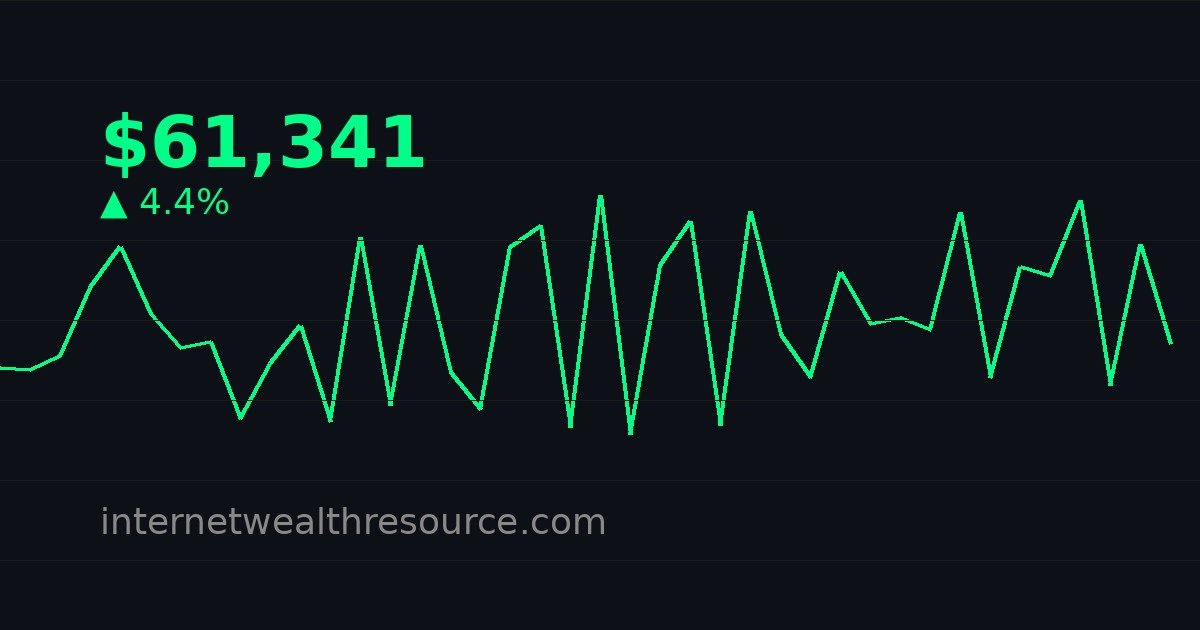
As we navigate the first quarter of 2026, the cryptocurrency market presents a complex and dynamic landscape. While Bitcoin, currently trading at $67,950, experiences a notable 24-hour pullback of nearly 4%, the spotlight intensifies on the Ethereum ecosystem. The Ethereum price is not moving in a vacuum; it is being shaped by a confluence of technological milestones, macroeconomic shifts, and evolving regulatory frameworks. For investors, understanding the forces at play this March is crucial for navigating both the immediate volatility and the long-term trajectory of the world’s leading smart contract platform. This analysis dives deep into the current state of Ethereum, providing data-driven insights and actionable perspectives for the informed market participant.

The Macro Backdrop: Bitcoin’s Slide and Its Ripple Effect

The broader crypto market is feeling the weight of Bitcoin’s correction. With a market cap still holding strong above $1.35 trillion, Bitcoin’s movements set the tone. The -3.98% dip and high volume of nearly $40 billion suggest significant profit-taking or risk-off sentiment entering the market. Historically, such Bitcoin volatility has a correlative effect on altcoins, including Ethereum. In the short term, this creates headwinds for any sustained Ethereum price rally, as capital often flows out of riskier assets during periods of uncertainty. Investors should monitor Bitcoin’s support levels closely, as stability in the flagship cryptocurrency is often a prerequisite for altcoin season momentum.

Ethereum’s Fundamental Engine: Beyond the Price Chart

To forecast where the Ethereum price might head, one must look under the hood. March 2026 is not just another month; it represents a period of continued maturation for the network following several key upgrades.

Post-Dencun Evolution and Layer-2 Dominance

The Dencun upgrade, now over a year in the rearview, has fundamentally reshaped the ecosystem. Proto-danksharding has drastically reduced data availability costs for Layer-2 rollups. The result? Networks like Arbitrum, Optimism, and zkSync are processing transactions at a fraction of the cost, driving unprecedented adoption. The health of the Ethereum ecosystem is now increasingly measured by Total Value Locked (TVL) across its L2s and the volume of decentralized applications thriving on this scalable infrastructure. A rising tide in L2 activity is a profoundly bullish fundamental indicator for the underlying ETH asset.

The Staking Landscape and Scarcity Dynamics

With the transition to Proof-of-Stake complete, the share of staked ETH continues to be a critical metric. As of March 2026, a significant portion of the supply remains locked in validation contracts, earning yields but reducing liquid circulating supply. This dynamic, combined with the ongoing fee burn mechanism from EIP-1559, creates a consistent deflationary pressure on ETH. In periods of high network usage, more ETH is burned than issued, directly increasing scarcity. This built-in economic model is a core component of long-term Ethereum price valuation theories.

Bullish Catalysts for Ethereum in March 2026

Several factors could propel Ethereum upward despite the current macro chill.

  • Institutional Product Approvals: The potential launch of new, regulated financial products like spot Ethereum ETFs in major global jurisdictions could unlock a wave of institutional capital, mirroring Bitcoin’s historical inflows.
  • DeFi and NFT Renaissance: Innovations in decentralized finance (DeFi) and non-fungible tokens (NFTs), particularly around tokenized real-world assets (RWAs) and dynamic digital collectibles, could trigger a new wave of user adoption and network activity.
  • Regulatory Clarity: Positive regulatory developments that clearly distinguish ETH as a commodity, not a security, in key markets like the U.S. and EU would remove a significant overhang and boost investor confidence.

Bearish Risks and Challenges to Consider

A balanced view requires acknowledging the potent risks facing Ethereum’s valuation.

  • Macroeconomic Pressure: Persistent high interest rates or a recession could suppress risk appetite across all financial markets, leading to capital outflow from crypto assets.
  • Competitive Threat from Alt-L1s: While Ethereum’s L2s are thriving, competing Layer-1 blockchains with higher throughput and lower fees continue to vie for developer mindshare and TVL, potentially fragmenting the market.
  • Network Congestion and Fee Spikes:

    Despite L2 progress, periods of intense market activity can still lead to high fees on the Ethereum mainnet, which may deter certain users and applications, creating negative sentiment around the Ethereum price.

  • Technical Execution Risk: The complexity of future network upgrades always carries the risk of delays or unforeseen technical issues, which can impact market confidence.

Actionable Insights for Investors

Navigating this environment requires strategy, not speculation. Here are key considerations for March 2026:

  • Dollar-Cost Average (DCA): Given the volatility exemplified by Bitcoin’s current swing, a disciplined DCA strategy can help investors build a position without trying to time the market bottom.
  • Monitor On-Chain Metrics: Look beyond the price. Track L2 TVL growth, net ETH staked, and burn rates. Strong fundamentals during a price dip can signal a buying opportunity.
  • Diversify Within the Ecosystem: Consider exposure to the Ethereum ecosystem not just through ETH, but also through carefully researched tokens of leading L2 networks and foundational DeFi protocols.
  • Maintain a Long-Term Horizon: Short-term price action, like Bitcoin’s -4% day, is noise. The long-term thesis for Ethereum hinges on its role as the foundational settlement layer for the decentralized internet.

Conclusion: A Pivotal Moment for Patient Capital

March 2026 finds Ethereum at a fascinating crossroads. The short-term Ethereum price is undoubtedly influenced by Bitcoin’s corrective phase and broader market jitters. However, the underlying network is stronger and more capable than ever, powered by a flourishing Layer-2 ecosystem and a robust economic model. For investors, this period of potential consolidation may offer a strategic entry point, provided they are grounded in the technology’s fundamentals rather than fleeting sentiment. The coming months will test the network’s resilience and adoption thesis. Those who focus on Ethereum’s proven ability to innovate and its central role in Web3’s infrastructure are likely to view any price weakness not as a threat, but as a characteristic of the volatile path toward a transformed digital economy.

nn

Related: About Us | Contact

n

Sources: CoinDesk, CoinGecko, Bloomberg

Similar Posts

Leave a Reply

This site uses Akismet to reduce spam. Learn how your comment data is processed.

Ethereum Price: What Investors Need to Know in March 2026

Ethereum Price: What Investors Need to Know in March 2026

As the crypto market enters a pivotal phase in March 2026, all eyes are on the Ethereum price, which continues to navigate a complex landscape of technological upgrades, macroeconomic pressures, and shifting regulatory tides. With Bitcoin holding steady above $68,000, the performance of the leading smart contract platform serves as a critical barometer for the broader altcoin sector. For investors, understanding the confluence of factors driving Ethereum’s valuation is more crucial than ever. This analysis dives deep into the current state of the ETH market, examining the key catalysts, potential roadblocks, and strategic considerations that could define its trajectory for the remainder of the year.

The Current State of the Ethereum Market

As of early March 2026, Ethereum is trading within a consolidating range, reflecting a market caught between bullish long-term fundamentals and near-term uncertainty. While Bitcoin’s dominance remains strong with a market cap exceeding $1.36 trillion, Ethereum’s own metrics tell a story of robust, albeit cautious, network health. On-chain activity has seen a steady increase, driven by sustained adoption in decentralized finance (DeFi) and the burgeoning tokenized real-world assets (RWA) sector. However, transaction fees, while significantly lower than the peaks of previous cycles, remain a point of observation for scalability. The network’s transition to a fully proof-of-stake consensus, now several years mature, continues to underpin its value proposition with a substantial and growing staked ETH supply, creating a structurally different supply dynamic than in previous market cycles.

Key Catalysts Influencing Ethereum’s Valuation

Several specific developments are directly impacting the Ethereum price outlook this month.

1. The Post-Dencun Upgrade Landscape

The full effects of the Dencun upgrade, particularly the implementation of proto-danksharding via EIP-4844, are now being realized. Layer-2 scaling solutions like Arbitrum, Optimism, and zkSync are experiencing dramatically lower data availability costs, making transactions cheaper for end-users. This has led to a measurable surge in L2 activity, which ultimately secures and settles on the Ethereum mainnet. This “rollup-centric” roadmap is proving successful, driving fundamental demand for block space while improving the user experience—a net positive for long-term ETH valuation.

2. Regulatory Clarity and ETF Developments

March 2026 finds the market in a state of heightened anticipation for further regulatory clarity, particularly in the United States. The status of spot Ethereum ETFs, potentially including staking features, is a dominant narrative. While several products have launched in other global jurisdictions, approval and massive inflows into a U.S. spot ETF would represent a monumental shift in capital accessibility, mirroring the transformative impact seen with Bitcoin ETFs. Any official announcements or delays this month will cause significant volatility in the Ethereum price.

3. Macroeconomic Crosscurrents

Global interest rate policies and inflation data remain inextricably linked to crypto asset performance. With traditional markets exhibiting volatility, Ethereum, as a higher-beta asset compared to Bitcoin, is sensitive to shifts in liquidity and investor risk appetite. A “risk-on” environment fueled by dovish central bank signals could provide a strong tailwind, while a return to hawkish rhetoric or geopolitical instability could pressure prices in the short term.

Bullish vs. Bearish: The Diverging Perspectives

A balanced view requires examining both sides of the investment thesis.

The Bull Case

  • Network Effect Dominance: Ethereum’s first-mover advantage in smart contracts is fortified by an unparalleled developer ecosystem, making it the default choice for major institutional tokenization projects.
  • Scaling Success: The thriving L2 ecosystem is solving the scalability trilemma, enabling massive throughput without compromising decentralization or security.
  • Deflationary Pressure: The fee-burn mechanism (EIP-1559), combined with high staking ratios, continues to reduce net supply issuance, creating a structurally bullish supply dynamic.
  • Institutional Onboarding: Continued progress in regulation and traditional finance integration points to a new wave of institutional capital.

The Bear Case

  • Competitive Pressure: Rival “Ethereum-killer” chains and app-specific L2s are aggressively competing for market share, potentially fragmenting liquidity and developer mindshare.
  • Regulatory Overhang: The potential for stringent regulations targeting staking or DeFi could impose operational constraints and dampen innovation on the network.
  • Technical Complexity: The evolving multi-layer architecture (L1, L2, L3) may introduce user experience friction and security assumptions that are not yet fully battle-tested at massive scale.
  • Macro Headwinds: A severe global economic downturn could lead to a correlated sell-off across all risk assets, including crypto, outweighing positive network fundamentals in the short term.

Actionable Insights for March 2026 Investors

Navigating the current market requires a strategic approach. Here are specific considerations:

  • Dollar-Cost Averaging (DCA) in Volatility: Given the potential for price swings around regulatory news, a disciplined DCA strategy can help investors build a position without trying to time the market perfectly.
  • Monitor On-Chain Metrics: Pay close attention to data beyond the spot Ethereum price. Key indicators include the Net Unrealized Profit/Loss (NUPL), exchange outflow volumes, and growth in Total Value Locked (TVL) across major L2s.
  • Staking Evaluation: With the network secure, evaluate the opportunity cost and rewards of staking a portion of your holdings versus keeping them liquid for potential trading opportunities.
  • Portfolio Rebalancing: Use this period of consolidation to review your overall crypto portfolio allocation. Ensure your exposure to ETH aligns with your updated risk tolerance and conviction in its long-term thesis relative to other assets.

The Road Ahead: Ethereum’s Evolving Narrative

Looking beyond the immediate monthly chart, the Ethereum price is increasingly being evaluated as a yield-generating, productive asset rather than just a speculative token. Its role as the foundational settlement layer for a new digital economy—encompassing finance, identity, and ownership—is coming into sharper focus. The success of its scaling roadmap has shifted the narrative from “can it scale?” to “how will value accrue to the base layer?” As the network’s utility becomes more tangible through real-world applications, its correlation with pure monetary assets like Bitcoin may continue to diverge.

Conclusion

March 2026 presents a critical juncture for Ethereum. The convergence of technological maturity, regulatory milestones, and macroeconomic forces is setting the stage for the next major move. While short-term volatility is almost guaranteed, the fundamental pillars of the Ethereum network appear stronger than ever. For investors, success will hinge less on predicting daily fluctuations in the Ethereum price and more on understanding the profound shift it represents in the architecture of the internet and global finance. A focus on long-term network adoption, disciplined risk management, and the evolving utility of the ETH token itself will be far more valuable than reacting to the noise of headline-driven price action. The coming months will test Ethereum’s resilience and its ability to transition from a promising protocol to the bedrock of a new digital era.

nn

Related: About Us | Contact

n

Sources: CoinDesk, CoinGecko, Bloomberg
Similar Posts

Leave a Reply

This site uses Akismet to reduce spam. Learn how your comment data is processed.