Breaking Down SEC Crypto: February 2026 Edition

Breaking Down SEC Crypto: February 2026 Edition
The landscape of cryptocurrency regulation is a perpetual chess match, and in February 2026, the U.S. Securities and Exchange Commission (SEC) remains the most consequential player on the board. With Bitcoin trading at a robust $66,139 amidst a minor pullback, the market’s resilience is being tested not just by macroeconomic forces, but by the evolving and increasingly nuanced regulatory framework. This month’s edition dives deep into the latest SEC crypto developments, analyzing how recent rulings, enforcement trends, and legislative pressures are shaping the investment terrain for the year ahead. For investors navigating this complex environment, understanding the SEC’s current posture is no longer optional—it’s essential for risk management and strategic positioning.
The State of Play: Key SEC Actions in Early 2026
The first quarter of 2026 has seen the SEC continue its dual-track approach of targeted enforcement and (grudging) adaptation to court mandates. A significant shift has been the agency’s more deliberate pace in approving spot Ethereum ETFs following the precedent set by Bitcoin ETFs in 2024. While several are now live, their approval came with unprecedented levels of issuer oversight and data-sharing agreements, signaling the SEC’s intent to maintain a tight leash. Simultaneously, enforcement actions have become more surgical, focusing on clear cases of fraud and market manipulation rather than broad, industry-wide lawsuits targeting core technology. This suggests a maturing, if still tense, relationship between the regulator and the SEC crypto ecosystem.
Market Impact: Regulation as a Price Driver
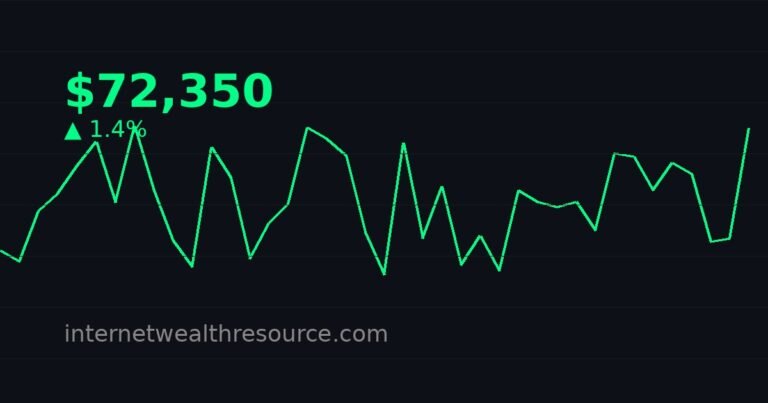
As of February 23, 2026, Bitcoin’s price of $66,139.00, with a 24-hour dip of -2.18%, reflects a market digesting multiple inputs. The high volume of over $43 billion indicates strong institutional presence, a direct consequence of clearer, albeit strict, regulatory pathways. The current pullback can be partially attributed to profit-taking after a strong Q4 2025 rally, but analysts are also pointing to investor caution ahead of anticipated SEC commentary on new asset classes like DeFi governance tokens and real-world asset (RWA) protocols.
- Bullish Perspective: The institutionalization fostered by SEC oversight has led to deeper liquidity and reduced extreme volatility. The $1.32 trillion market cap is seen as a more stable foundation for growth, attracting pension funds and conservative capital that previously stayed on the sidelines.
- Bearish Perspective: The regulatory overhang continues to stifle innovation in the U.S., pushing developers and projects offshore to more favorable jurisdictions. This could result in the U.S. missing the next wave of blockchain innovation, and the compliance costs for existing firms are eating into profitability and slowing product development.
Spotlight on Enforcement: New Precedents, New Defenses
The SEC’s enforcement division has been busy setting new precedents. A landmark case concluded in January 2026 involving a major staking-as-a-service provider. The SEC’s victory established that certain forms of pooled staking can be considered investment contracts, expanding the “Howey Test” into new operational layers of blockchain. Conversely, the courts have continued to push back on overly broad interpretations. In a key ruling, a federal judge dismissed parts of an SEC case against an altcoin project, stating that a sufficiently decentralized network’s token does not inherently constitute a security in secondary sales—a nuanced but critical distinction for many existing projects.
Actionable Insight for Investors
Scrutinize project documentation more than ever. Look for clear disclosures about regulatory engagement and legal opinions. Projects with opaque structures or that promise guaranteed returns from “staking” or “yielding” are at higher risk of being the next SEC crypto enforcement target. Prioritize assets from entities that proactively engage with compliance.
The Legislative Horizon: Congress Steps In
Pressure from Congress is becoming a tangible counterbalance to the SEC’s authority. Bipartisan drafts of comprehensive crypto market structure bills are circulating with serious momentum, aiming to clarify the jurisdictional divide between the SEC and the CFTC. The core proposal involves defining a “digital asset” that is not a security, creating a path for tokens that start as securities (through an ICO, for example) to transition to a commodity status upon achieving sufficient decentralization. While not yet law, this legislative activity is forcing the SEC to the negotiating table and providing a more predictable long-term outlook for the industry.
Strategic Moves for the Regulated Investor
In this environment, passive holding is no longer the only—or smartest—strategy. Investors must build regulatory awareness into their thesis.
- Diversify by Regulatory Profile: Balance holdings in “blue-chip,” SEC-compliant assets like Bitcoin and Ethereum ETFs with a calculated allocation to higher-risk, innovative protocols, understanding the latter’s potential regulatory vulnerability.
- Geographic Diversification: Consider exposure to projects and holding entities based in jurisdictions with advanced, clear regulatory frameworks (e.g., EU under MiCA, Singapore, Switzerland).
- Stay Informed on Court Dockets: Major SEC crypto cases are often telegraphed. Following legal proceedings can provide early warning signs for entire asset sub-sectors.
- Focus on Fundamentals: In a regulated market, projects with clear utility, sustainable tokenomics, and robust governance will weather scrutiny better than those reliant on hype.
Looking Ahead: The Path to Q4 2026
The trajectory for the remainder of 2026 hinges on three factors: the finalization of congressional legislation, the SEC’s adaptation to its court losses, and the market’s reaction to the first major enforcement action under any new rules. We anticipate a period of consolidation as the rules of the road become firmer. This may limit meteoric, speculation-driven rallies but should also provide a stronger buffer against catastrophic crashes. The era of the “wild west” is conclusively over, replaced by a more traditional—and for many, more navigable—financial market structure under the watchful eye of the SEC.
Conclusion: The SEC crypto narrative in February 2026 is one of convergence. The market, the regulator, and the legislature are slowly aligning toward a workable, if imperfect, framework. For investors, this translates to a landscape where regulatory risk is becoming more quantifiable and less of a binary existential threat. While the short-term volatility induced by regulatory headlines will persist, the long-term implication is profound: cryptocurrency is being institutionalized. Success will belong to those who adapt their strategies to prioritize not just technological and financial due diligence, but rigorous regulatory awareness as a core component of their investment process.
Sources: CoinDesk, CoinGecko, Bloomberg