Bitcoin Adoption Update — Key Trends and Analysis for March 2026
Bitcoin Adoption Update — Key Trends and Analysis for March 2026
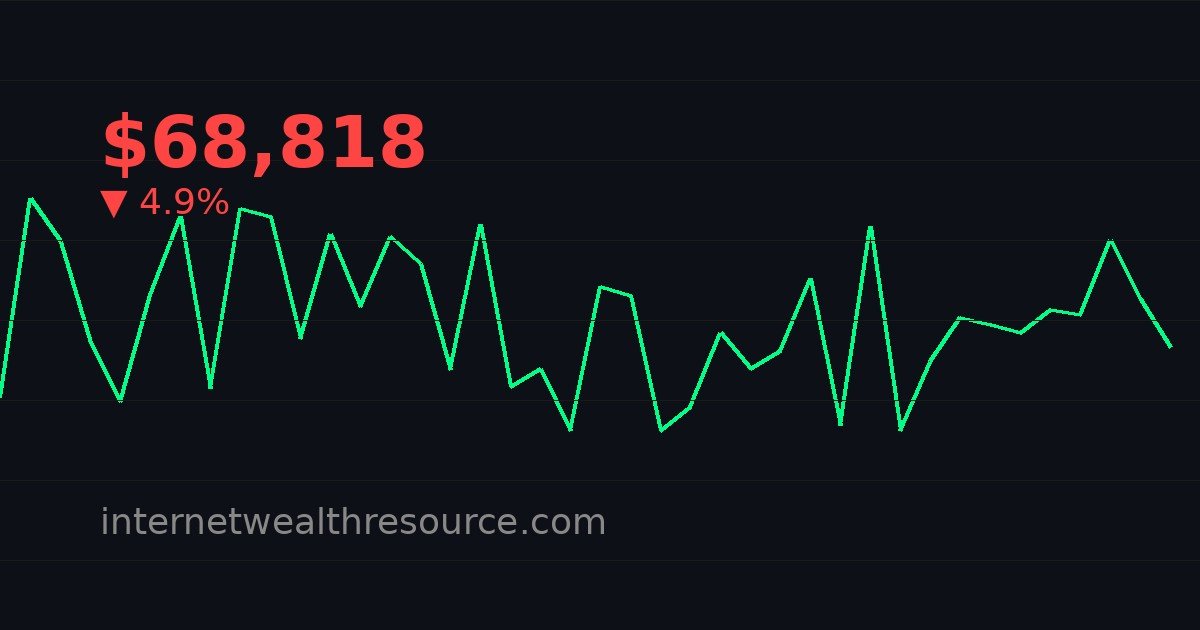
As we move through March 2026, the narrative surrounding Bitcoin is undergoing a profound shift. While the price, currently consolidating around $69,873 after a recent -4.20% dip, captures headlines, the underlying story is one of deepening institutional integration and real-world utility. The volatility reflected in a $47.2 billion daily trading volume is no longer just speculative frenzy; it is increasingly the sound of a maturing asset class finding its footing within the global financial architecture. This month’s analysis delves beyond the charts to explore the tangible signals of Bitcoin adoption that are setting the stage for the next phase of crypto’s evolution.
The Macro Backdrop: Regulation and Institutional On-Ramps
The regulatory landscape, once a formidable barrier, is crystallizing into a structured framework in key jurisdictions. The approval and successful operation of multiple spot Bitcoin ETFs in the US, UK, and parts of Asia have created a compliant, low-friction gateway for traditional capital. This quarter has seen a notable acceleration in pension funds and sovereign wealth funds allocating small but significant portions (0.5% to 2%) of their portfolios to these regulated products. This silent influx provides a stabilizing bedrock of demand, partially explaining Bitcoin’s resilience above the $1.39 trillion market cap level despite macroeconomic headwinds like fluctuating interest rates.
Corporate Treasury Strategy Evolves
The corporate playbook is also advancing. Beyond simply “holding Bitcoin on the balance sheet,” forward-thinking CFOs are now exploring its use in treasury management operations. We’re witnessing pilot programs for cross-border subsidiary settlements and the use of Bitcoin as collateral in decentralized finance (DeFi) lending protocols to generate yield on otherwise static assets. This represents a maturation from a speculative bet to an operational tool, a critical inflection point for sustained Bitcoin adoption.
On-Chain Metrics: Telling the Story Beneath the Price
Key on-chain indicators in March 2026 reveal a market in a phase of accumulation, not distribution. Despite the price pullback, the number of “whole coiners” (addresses holding 1+ BTC) continues to hit new all-time highs. Furthermore, the percentage of the total supply that hasn’t moved in over two years remains elevated above 55%, indicating strong conviction among long-term holders. The network’s hash rate—a measure of computational security—also persists at record levels, underscoring miner confidence in the long-term proposition regardless of short-term price action.
- Holder Growth: The cohort of addresses holding 0.1 BTC or more is expanding at a steady 2.1% monthly rate.
- Exchange Outflows: Net outflows from centralized exchanges have been positive for three consecutive weeks, suggesting investors are moving coins to self-custody.
- Active Addresses: While down from the ETF approval frenzy, daily active addresses remain 30% higher than the 2024 baseline, indicating healthy network use.
Geographic Hotspots and Payment Integration
Bitcoin adoption is not uniform globally, and March 2026 highlights distinct geographic leaders. Nations with high inflation or currency instability continue to see peer-to-peer Bitcoin volume surge. Meanwhile, in developed economies, the integration is happening at the payment processor level. Major point-of-sale (POS) software providers have begun natively integrating Bitcoin and Lightning Network settlements, abstracting the complexity for merchants. This “plumbing-level” integration is more significant than individual merchant announcements, as it enables scalable, seamless Bitcoin adoption for everyday commerce.
The Lightning Network’s Quiet Revolution
The Lightning Network, Bitcoin’s layer-2 scaling solution, is experiencing unprecedented growth in capacity and node count. Its use for instant, low-cost micropayments is moving beyond niche experiments to being embedded in social media platforms, content monetization tools, and even streaming services as a pay-per-second option. This utility layer is creating a user experience that rivals traditional digital payments, addressing a long-standing critique of Bitcoin’s primary network.
Market Analysis & Investor Sentiment for March 2026
With Bitcoin trading at $69,873, the market is digesting the monumental gains of late 2025. The current -4.20% 24-hour change is viewed by many analysts as a healthy correction within a broader bullish trend, shaking out leverage and establishing stronger support. The $47 billion daily volume confirms that institutional liquidity is present, providing both stability and the potential for rapid moves.
Bullish Catalysts on the Horizon
- Continued Institutional Inflows: The quarterly rebalancing period for pension funds could see further inflows into spot ETFs.
- Technological Upgrades: Ongoing protocol improvements enhance privacy and programmability, broadening use cases.
- Global Reserve Asset Narrative: Geopolitical tensions continue to fuel the discourse around Bitcoin as a non-sovereign store of value.
Bearish Risks and Headwinds
- Macroeconomic Pressure: A stronger-than-expected US dollar or further rate hikes could pressure risk assets broadly.
- Regulatory Surprises: While improving, adverse regulatory action in a major economy remains a tail risk.
- Market Exhaustion: After a massive rally, a deeper and more prolonged consolidation phase is possible.
Actionable Insights for Investors
In this environment, a strategic approach is paramount. Investors should consider dollar-cost averaging (DCA) during periods of volatility to mitigate timing risk. Given the maturation of the ecosystem, allocating a portion of a portfolio to companies building Bitcoin infrastructure (miners, custodians, Layer-2 developers) offers a diversified play on Bitcoin adoption. Most critically, the emphasis must shift from short-term price speculation to understanding the fundamental drivers of long-term network growth and security. Self-custody education is no longer optional; securing your assets in a hardware wallet is a foundational step in this new era.
Conclusion: The Infrastructure Phase is Here
The story of March 2026 is not defined by a single price point. It is defined by the silent, systemic integration of Bitcoin into the fabric of global finance and technology. The metrics of adoption—from non-moving supply and hash rate to Lightning Network capacity and regulatory clarity—are painting a picture of an asset class transitioning from speculative outlier to established pillar. While volatility will remain a feature, its amplitude may be tempered by the growing depth and sophistication of the market. The coming months will likely focus on scaling the utility that this robust infrastructure now supports, making the trend of Bitcoin adoption less about attracting new buyers and more about enabling new uses. For the astute observer, the current consolidation is not a period of stagnation, but of foundation-building for the next cycle of growth.
nn
n
Sources: CoinDesk, CoinGecko, Bloomberg